
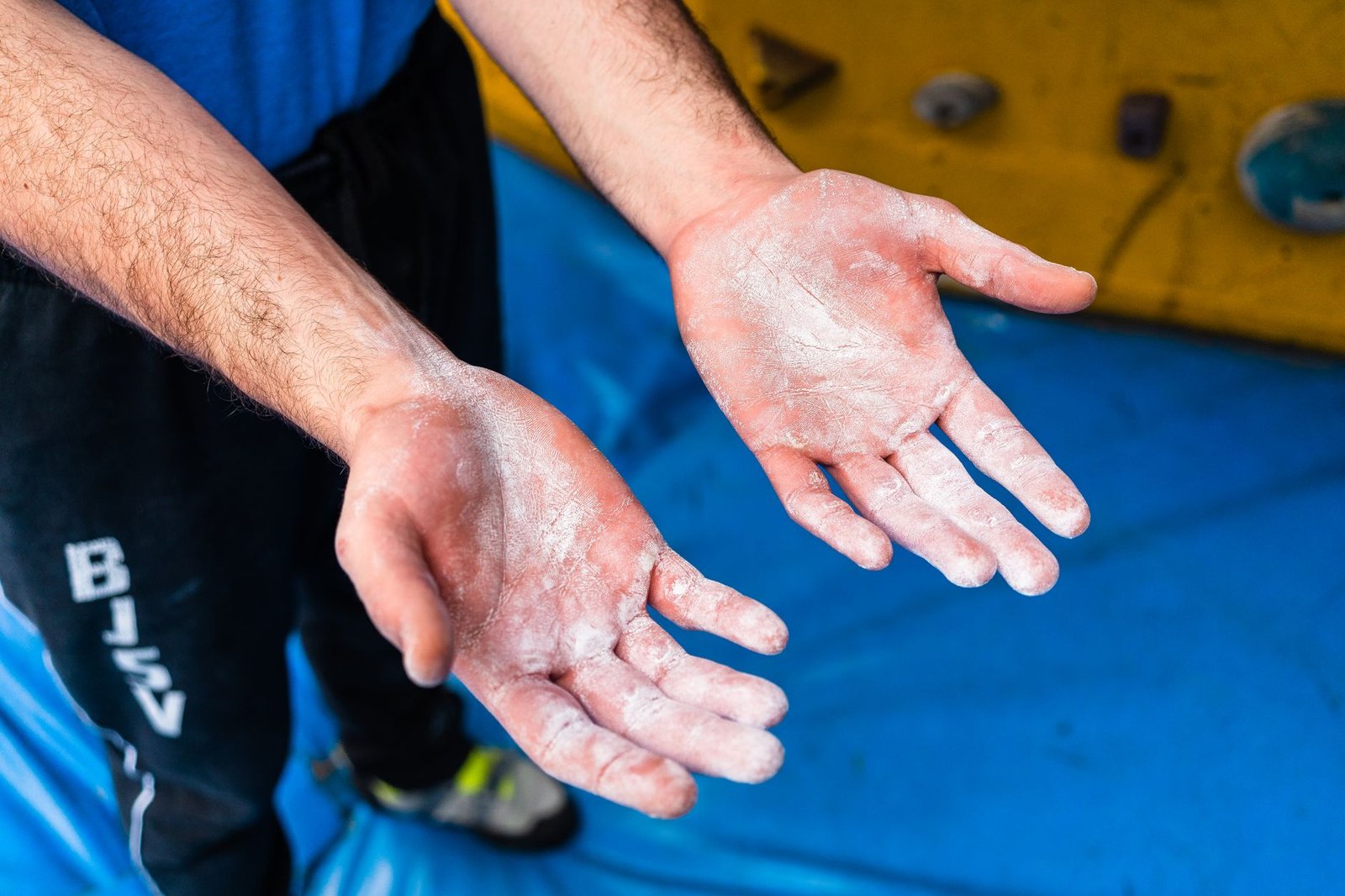
Introduction: Understanding Chalk for Gym Climbing Hands
Embarking on the exhilarating journey of gym climbing or bouldering in India is a fantastic way to build strength, agility, and mental fortitude. As you scale vertical challenges, one seemingly small but incredibly significant tool often catches the eye of beginners: the white powder that climbers frequently apply to their hands. This isn’t just any powder; it’s a specialised substance known as chalk, and its role in enhancing grip and performance for gym climbing hands is absolutely pivotal. For those new to the sport, understanding what this chalk is, why it’s used, and how it dramatically improves your climbing experience is the first step towards unlocking your full potential on the wall.
The humid climate prevalent across much of India, from the coastal cities to the bustling metropolises, often means sweat can quickly become a climber’s worst enemy. Slippery hands can not only hinder progress but also pose a safety risk. This is precisely where the magic of chalk comes into play. It’s designed to absorb moisture, providing a dry, secure surface that allows you to maintain a firm hold on even the most challenging grips.
At GameOnGlow, we believe in empowering every athlete with the knowledge and tools they need to excel. This comprehensive guide will demystify the world of chalk for gym climbing hands, explaining its composition, its various forms, and the undeniable benefits it offers. Whether you’re just starting out at your local climbing gym in Bengaluru, Delhi, or Mumbai, or are looking to refine your technique, mastering the use of climbing chalk is an indispensable skill that will elevate your game.
What Exactly is Chalk for Gym Climbing Hands?
When we talk about chalk for gym climbing hands, it’s crucial to understand that we are not referring to the blackboard chalk used in schools. That type of chalk is typically made from calcium carbonate, which, while capable of leaving a white residue, does not possess the same moisture-absorbing and friction-enhancing properties vital for climbing. The chalk used by climbers is scientifically known as magnesium carbonate (MgCO₃).
Magnesium carbonate is a naturally occurring mineral celebrated for its exceptional hygroscopic qualities, meaning it readily absorbs moisture. In its pure form, it’s a white, powdery substance that feels incredibly fine to the touch. When applied to the hands, it creates a thin, dry layer that dramatically increases the friction between your skin and the climbing hold. This enhanced friction is what allows climbers to grip more securely, reducing the chances of slipping due to sweat or natural oils on the skin.
The history of using magnesium carbonate in athletics dates back centuries, with gymnasts being among the first to widely adopt it for improved grip on apparatus. Its application quickly spread to other sports requiring strong, secure handholds, including weightlifting and, of course, rock climbing and bouldering. Today, it’s an indispensable part of almost every climber’s gear kit, from casual gym-goers to professional athletes tackling the most extreme outdoor routes.
Different Forms of Chalk for Gym Climbing Hands
While the core ingredient remains magnesium carbonate, chalk for gym climbing hands comes in several convenient forms, each with its own advantages and preferred applications. Understanding these variations will help you choose the best option for your personal climbing style and the conditions you face in Indian climbing gyms.
- Powdered Chalk: This is the most traditional and widely recognised form. It comes as a loose, fine powder, often stored in a chalk bag worn around the waist. Climbers dip their hands into the bag as needed. Its primary benefit is immediate and thorough coverage, allowing for quick reapplication during a climb. However, it can be messy, creating dust in the gym, which some facilities try to minimise.
- Chalk Balls: A chalk ball is essentially powdered chalk contained within a permeable fabric sphere, often made of mesh. You squeeze the ball to release a controlled amount of chalk onto your hands. This form helps reduce airborne dust and prevents excessive chalk usage, making it a popular choice in gyms with strict dust policies. It offers a more even and less messy application than loose powder.
- Block Chalk: This is magnesium carbonate pressed into a solid block. Climbers can either break off pieces to crush into powder or rub the block directly onto their hands. Block chalk is economical and versatile, allowing users to customise the fineness of their powder or apply it directly for a thicker coating where needed. It’s great for those who prefer to prepare their own chalk supply.
- Liquid Chalk: A modern innovation, liquid chalk is a solution of magnesium carbonate mixed with alcohol and sometimes other drying agents. You apply a small amount to your hands, rub them together, and the alcohol quickly evaporates, leaving a thin, even layer of dry chalk. Liquid chalk is excellent for a base layer, providing a long-lasting, uniform coating with minimal mess. It’s particularly effective in humid conditions and can be ideal for a sustained climb without needing to re-chalk frequently.
Why Every Climber Needs Chalk for Gym Climbing Hands
For anyone serious about improving their climbing performance and ensuring safety, chalk for gym climbing hands isn’t just an accessory; it’s a fundamental piece of equipment. The reasons are rooted in the very physics of climbing and the human body’s response to physical exertion. When you climb, your body naturally produces sweat, especially from the palms of your hands. This sweat, combined with the natural oils on your skin, creates a slick surface that drastically reduces friction between your hands and the climbing holds. This reduction in friction is the primary antagonist to a successful climb.
Imagine attempting to hold onto a smooth, plastic surface with wet hands – it’s incredibly difficult, if not impossible. Climbing holds, even those with textured surfaces, become treacherous when your hands are damp. A slip can lead to a lost grip, a fall, and potentially an injury. This is where the crucial role of chalk for gym climbing hands becomes abundantly clear. It acts as a powerful desiccant, absorbing moisture and creating a dry, grippy surface that allows you to maintain contact and control.
Beyond the immediate physical benefits, the psychological impact of using chalk is also significant. Knowing your hands are dry and secure instils confidence, allowing you to focus on technique, movement, and route-reading rather than worrying about slipping. This peace of mind is invaluable, especially when attempting challenging routes or pushing your limits on a new problem. For the burgeoning climbing community across India, where humidity can be a constant factor, chalk becomes an even more indispensable ally. Learn more about The Ultimate Guide to Liquid Chalk Gym Climbing in India
The Problem: Sweat, Humidity, and Poor Grip
Indian weather patterns, particularly during the monsoon season or in coastal regions, often bring high humidity levels. This environmental factor exacerbates the natural sweating process that occurs during strenuous physical activity like climbing. Even in air-conditioned gyms, the intensity of a climb can cause palms to become clammy within minutes. This moisture fills the microscopic ridges and valleys of your skin, effectively lubricating your hands and making them less capable of generating the necessary friction with the holds. The result is a compromised grip, leading to: Learn more about The Ultimate Guide to Liquid Chalk Gym Climbing for Indian Climbers
- Frequent Slips: Hands slide off holds, making it difficult to maintain position.
- Increased Fatigue: You have to squeeze holds much harder to compensate for the lack of friction, leading to premature forearm pump and exhaustion.
- Reduced Confidence: Constant fear of slipping can make climbers hesitant, impacting their ability to commit to moves.
- Higher Risk of Injury: Unexpected slips can lead to uncontrolled falls, sprained wrists, or other injuries.
The Solution: Chalk for Gym Climbing Hands Absorbs Moisture, Increases Friction
Magnesium carbonate directly addresses these issues. When applied to your hands, its porous structure acts like a sponge, drawing in sweat and oils from your skin. As it absorbs this moisture, it leaves behind a thin layer of dry, fine particles. These particles fill the microscopic pores and grooves on both your skin and the climbing holds, effectively increasing the surface area for contact and creating a multitude of tiny points of friction. This mechanism results in: Learn more about The Ultimate Guide to GameOnGlow Liquid Chalk Gym Climbing
- Superior Grip: Your hands stick to holds more effectively, even small or slippery ones.
- Enhanced Endurance: You expend less energy squeezing holds, allowing you to climb longer and tackle more difficult sequences.
- Greater Control: The improved friction gives you finer control over your movements and body positioning.
- Boosted Confidence: A secure grip allows you to climb with greater conviction and less apprehension.
- Improved Safety: Minimising slips directly reduces the risk of falls and associated injuries, making your climbing experience safer and more enjoyable.
How Chalk for Gym Climbing Hands Works Its Magic
Understanding the scientific principles behind chalk’s effectiveness can deepen your appreciation for this simple yet powerful tool. At its core, the magic of chalk for gym climbing hands lies in its chemical composition and physical properties, specifically its ability to manage moisture and enhance surface interaction. Magnesium carbonate is highly hygroscopic, meaning it has a strong affinity for water. When applied to your skin, it rapidly absorbs sweat and oils, drying out the surface of your hands.
Beyond simple drying, the fine particles of magnesium carbonate also play a crucial role in increasing friction. When your dry, chalked hands come into contact with a climbing hold, these tiny particles get lodged in the microscopic irregularities of both your skin and the hold. This creates an interlocking effect, dramatically increasing the coefficient of friction. It’s not just about dryness; it’s about altering the surface properties to maximise grip. This dual action of moisture absorption and friction enhancement is what makes chalk an indispensable tool for climbers worldwide, including those navigating the diverse climbing landscapes and gym conditions across India.
Mastering the Chalk-Up Technique
Using chalk effectively is an art in itself. It’s not just about dipping your hands; it’s about applying the right amount at the right time. An optimal chalking technique ensures you maximise grip without over-chalking, which can sometimes be counterproductive. Here’s how to master it:
- When to Chalk:
- Before Starting a Climb: Always apply a generous, even layer of chalk to both hands before you even touch the first hold. This provides a solid base layer of dryness.
- During a Climb (Strategic Re-Chalking): For longer routes or problems, you’ll likely need to re-chalk. Look for rests or stable positions where you can briefly take one hand off the holds without losing balance or expending too much energy. A quick dip and rub are usually sufficient. Avoid chalking in precarious positions where it might compromise your stability.
- How Much to Use:
- Less is More: A common beginner mistake is to over-chalk. While it might feel like more chalk means more grip, an excessively thick layer can actually reduce friction by creating a powdery, slippery interface between your hand and the hold. You want a thin, even coating that covers your palms and fingers.
- The “Ghost Hand” Test: After chalking, your hands should look like a “ghost hand” – covered in a fine, even white layer, but you should still be able to see the texture of your skin underneath. If your hands look like you’ve dipped them in flour, you’ve used too much.
- Application Technique:
- For Powder/Chalk Ball: Dip your hands into the chalk bag, ensuring your palms and fingers are covered. Rub your hands together briefly to distribute the chalk evenly and remove any excess. A quick clap or shake can help remove loose clumps.
- For Liquid Chalk: Squeeze a coin-sized amount onto one palm. Rub your hands together thoroughly, spreading the liquid over all surfaces of your palms and fingers. Wait a few seconds for the alcohol to evaporate completely, leaving your hands dry and coated. This often serves as an excellent base layer.
Practising your chalking technique will become second nature, allowing you to efficiently manage your grip and maintain focus on the climb. Remember, the goal is optimal dryness and friction, not just white hands.
The Game-Changing Benefits of Using Chalk for Your Gym Climbing Hands
The impact of using proper chalk on your gym climbing hands extends far beyond just preventing slips. It fundamentally transforms your climbing experience, offering a multitude of benefits that contribute to both performance and enjoyment. For climbers in India, where varying levels of humidity can make grip a constant challenge, these benefits are even more pronounced. Incorporating chalk into your routine is not merely a suggestion; it’s a strategic move to unlock a higher level of climbing proficiency and confidence.
When your hands are consistently dry and grippy, every aspect of your climb improves. You can hold onto smaller, more challenging holds with greater security, allowing you to attempt harder routes and push past your perceived limits. This enhanced physical capability then feeds into your mental game, building confidence and reducing the anxiety associated with slipping. The cumulative effect is a more fluid, efficient, and ultimately more rewarding climbing session. GameOnGlow is committed to helping you achieve these benefits by providing insights into essential climbing practices.
Beyond Grip: Chalk’s Role in Climbing Performance
While improved grip is the most obvious benefit, chalk for gym climbing hands contributes to performance in several interconnected ways that are crucial for progression:
- Enhanced Grip Strength and Endurance: By providing a reliable friction layer, chalk reduces the amount of force you need to exert to maintain a hold. This means your forearms don’t pump out as quickly, allowing you to climb for longer periods and tackle more moves before fatigue sets in. You can save precious energy for crucial sequences.
- Reduced Risk of Injury: Slips and uncontrolled falls are a primary cause of climbing injuries, from minor scrapes to more serious sprains or fractures. A secure grip significantly mitigates this risk. By preventing unexpected hand slips, chalk contributes directly to a safer climbing environment, allowing you to push your boundaries with greater peace of mind.
- Increased Confidence and Mental Focus: The psychological aspect of climbing is just as important as the physical. Knowing that your hands are reliably dry and grippy frees up mental energy. Instead of constantly worrying about slipping, you can focus entirely on technique, body positioning, route-reading, and executing complex movements. This mental clarity is a game-changer for projecting difficult routes and improving your overall climbing strategy.
- Better Tactile Feedback: A dry hand surface can actually enhance your ability to “feel” the holds. The chalk creates a more defined interface between your skin and the texture of the hold, giving you better sensory feedback about the hold’s shape, angle, and friction quality. This allows for more precise adjustments and a more intuitive connection with the climbing surface.
- Consistency in Performance: Whether it’s a hot, humid day in Chennai or a cooler evening in Delhi, chalk helps to normalise your grip conditions. This consistency allows you to perform at your best regardless of environmental factors, which is invaluable for training and achieving predictable results.
- Improved Send Rate: Ultimately, all these benefits converge to one goal: sending more routes and problems. With better grip, endurance, confidence, and focus, you’ll find yourself successfully completing climbs that once seemed impossible, pushing your grades, and celebrating new achievements on the wall.
Choosing the Right Chalk for Your Gym Climbing Hands in India
Navigating the options for chalk for gym climbing hands in the Indian market can seem a bit daunting for beginners, given the variety of forms and brands available. However, making an informed choice is key to optimising your climbing experience. Several factors come into play, including personal preference, gym regulations, and, of course, budget considerations in INR. Understanding these elements will help you select the best chalk that complements your climbing style and the specific conditions you encounter in Indian climbing gyms.
The climate in India, with its often-high humidity, means that the moisture-absorbing efficiency of your chosen chalk is particularly important. While all magnesium carbonate chalks aim to do this, some formulations or types might perform better under certain conditions. Furthermore, as climbing gyms become more prevalent across cities like Mumbai, Pune, and Hyderabad, some facilities are implementing rules regarding chalk dust, favouring options like chalk balls or liquid chalk to maintain air quality. Therefore, considering both performance and practicality is essential when making your purchase.
Factors to Consider When Buying Chalk in India
- Type of Chalk:
- Loose Powder: Offers immediate, full coverage. Best for those who want maximum control over application and don’t mind a bit of mess. Widely available and often the most economical option.
- Chalk Ball: A great compromise between loose powder and mess reduction. Ideal for gyms with dust restrictions. Provides a more controlled and even application.
- Liquid Chalk: Excellent for a base layer, especially in humid conditions, providing long-lasting dryness with minimal dust. Can be a bit pricier, but a little goes a long way. Some climbers use it as a base and then supplement with powder.
- Block Chalk: Cost-effective and versatile. You can crush it to your desired fineness or rub it directly. Good for those who prefer to prepare their own chalk.
- Quality and Purity:
- High-quality chalk will be finer, drier, and more effective at absorbing moisture. Look for brands that emphasise purity (e.g., 100% magnesium carbonate). Impurities can reduce effectiveness and potentially irritate skin.
- GameOnGlow is committed to sourcing high-quality sports essentials, including climbing gear. When you choose products recommended by us, you’re investing in reliability and performance.
- Price (INR):
- Prices for chalk can vary significantly. A small block or bag of powdered chalk might cost anywhere from ₹200 to ₹500. Chalk balls typically range from ₹300 to ₹700, while liquid chalk can be ₹400 to ₹1000 or more for a bottle, depending on size and brand.
- Consider your usage frequency. For casual climbers, a basic powder or chalk ball might suffice. More frequent climbers might find liquid chalk a worthwhile investment for its efficiency and longevity.
- Environmental and Health Considerations:
- Some climbers are sensitive to airborne chalk dust. If you or your gym are concerned about air quality, opt for chalk balls or liquid chalk.
- Consider brands that offer refillable options or sustainable packaging to reduce environmental impact.
- Availability in India:
- Most major online sports retailers and dedicated climbing gear shops in India will stock various types of chalk. You can also find them at many local climbing gyms.
- GameOnGlow often partners with reliable suppliers to ensure access to top-tier sports and wellness products, making it easier for you to find what you need locally or online.
Experimentation is key. What works best for one climber might not be ideal for another. Don’t be afraid to try different forms or brands to find the chalk that gives your gym climbing hands the best possible grip and enhances your overall climbing experience.
FAQs About Chalk for Gym Climbing Hands
Why is chalk for gym climbing hands different from blackboard chalk?
Chalk for gym climbing hands is primarily made of magnesium carbonate (MgCO₃), which is excellent at absorbing moisture and increasing friction. Blackboard chalk, on the other hand, is typically made of calcium carbonate (CaCO₃). While both are white powders, calcium carbonate does not possess the same hygroscopic properties or friction-enhancing capabilities crucial for maintaining a secure grip on climbing holds. Using blackboard chalk would be ineffective and potentially dangerous for climbing.
Can using too much chalk for gym climbing hands be bad?
Yes, using too much chalk can actually be counterproductive. An excessively thick layer of chalk can reduce the friction between your hands and the climbing holds, making them feel more slippery rather than grippy. It can also create excessive dust in the gym, which is an environmental concern and can be irritating to the respiratory system. Furthermore, constantly over-chalking can dry out your skin excessively over time, leading to cracking or irritation. The goal is a thin, even coating for optimal performance.
Is liquid chalk better than powder chalk for gym climbing?
Neither is definitively “better”; it depends on personal preference, climbing conditions, and gym rules. Liquid chalk provides a very consistent, long-lasting base layer of dryness with minimal dust, making it excellent for humid environments or gyms with strict air quality policies. Powdered chalk offers immediate, on-the-go reapplication and a more tactile feel. Many climbers use a combination: liquid chalk as a base layer for initial dryness, and then supplement with a small amount of powdered chalk from a chalk bag during the climb for quick touch-ups.
Where can I buy good quality chalk for gym climbing in India?
Good quality chalk for gym climbing hands is readily available across India. You can find it at dedicated climbing gyms, specialty sports stores that cater to adventure sports, and major online retailers like Amazon India, Decathlon, and other e-commerce platforms. Brands like GameOnGlow are also committed to providing high-quality sports equipment and can be a reliable source for your climbing chalk needs, often offering a range of options to suit different preferences and budgets. It’s advisable to check reviews and product specifications to ensure you’re getting pure magnesium carbonate.
Does chalk dry out my hands over time?
Yes, magnesium carbonate is designed to absorb moisture, and consistent, prolonged use can indeed lead to dry skin on your hands. This is a common concern for climbers. To mitigate this, it’s recommended to wash your hands thoroughly after your climbing session to remove all chalk residue. Following up with a good quality hand moisturiser or balm specifically designed for climbers can help rehydrate your skin and prevent cracking or excessive dryness. Maintaining skin health is just as important as maintaining grip.
Conclusion: Final Thoughts on Chalk for Gym Climbing Hands
As you delve deeper into the exciting world of climbing, the importance of chalk for gym climbing hands becomes undeniably clear. It’s more than just a white powder; it’s a scientifically proven tool that empowers you to overcome challenges, enhance your performance, and climb with greater confidence and safety. From absorbing the relentless sweat in India’s humid climate to providing that crucial friction needed to stick to tiny holds, chalk is an indispensable ally for every climber, from the absolute beginner to the seasoned veteran.
By understanding what chalk is, why it’s so effective, and how to use it properly, you’re not just adding a piece of gear to your kit; you’re investing in a fundamental skill that will elevate your entire climbing journey. Remember to choose the right type of chalk for your needs and environment, apply it strategically, and always prioritise skin care to keep your hands in prime climbing condition. At GameOnGlow, we encourage you to embrace this essential element of climbing. Equip your gym climbing hands with the right chalk, and experience the transformative difference it makes on the wall. Go forth, climb strong, and glow with every ascent!